How to Install Retaining Wall Blocks in 5 Steps (with Video)
Last updated: 17 Nov 2026 | 50 Views |
Quick answer: Most retaining walls that settle or lean fail at 3 points: a weak base, an unlevel first course, and water trapped behind the wall. Complete these 5 steps and the wall will stand for a long time.
Before you start: do not lay blocks right after filling soil
On newly filled land, or where the original topsoil is soft soil or mud, a wall placed directly on top will settle along with the loose soil. Always strip the original topsoil down to firm ground first. If the soil is very soft, have an engineer consider piles.
Installation steps
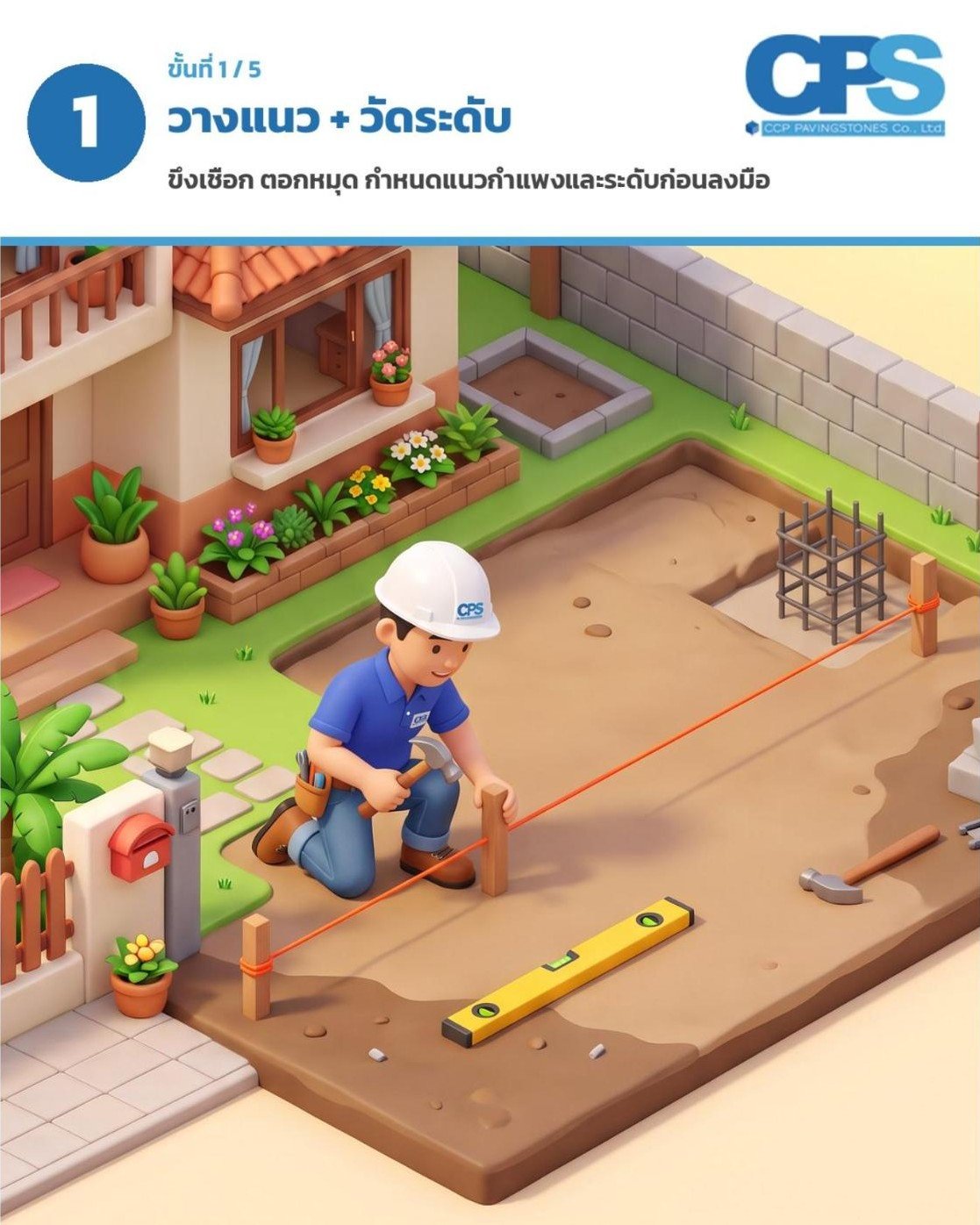
Set out the line and level — Stretch a string line and drive pegs to mark the wall line and level clearly before starting.
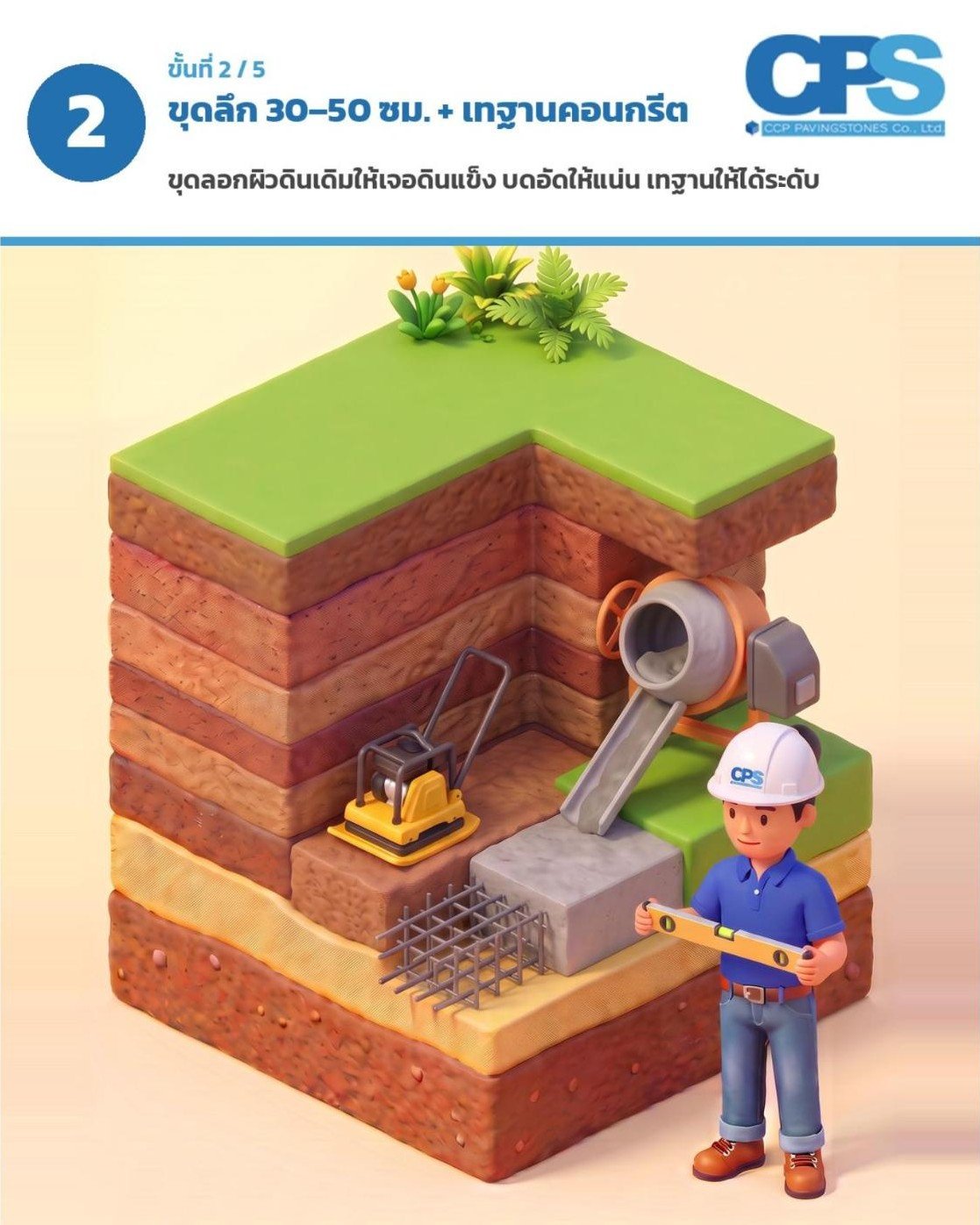
Dig 30-50 cm deep and pour a concrete footing — Strip the original ground 30-50 cm down to firm soil, add sand and compact it firmly, lay steel mesh, then pour a concrete footing about 15 cm thick, level along the whole line.
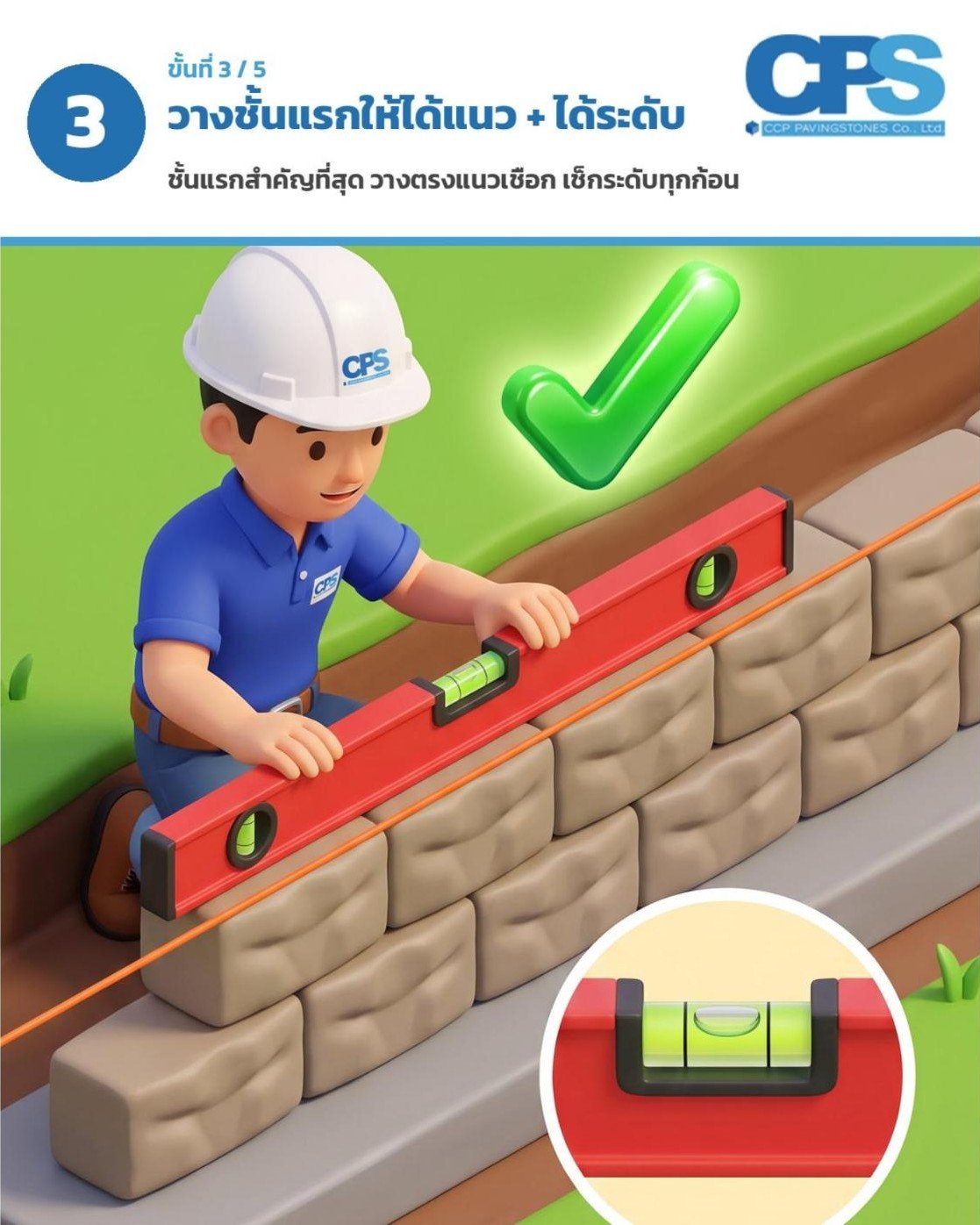
Lay the first course straight and level — Bury the first course 30-50 cm below the original ground level. Start from the bottom-left block and check the level of every block both along the wall and front to back.
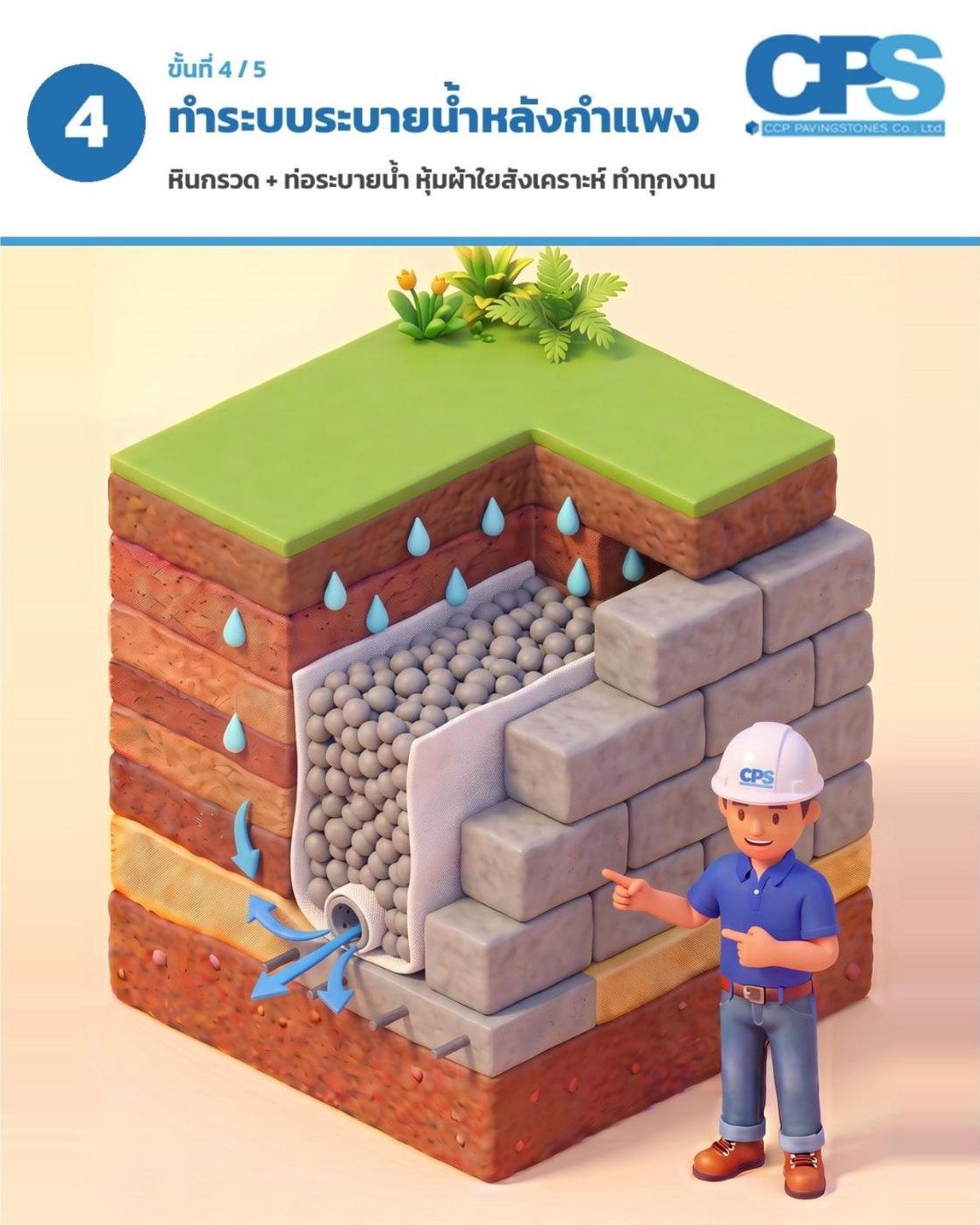
Build drainage behind the wall — Place ¾-inch gravel 50 cm thick behind the blocks, lay a drainage pipe at the base of the wall (for every job and every height), and wrap both the gravel layer and the pipe in geotextile.
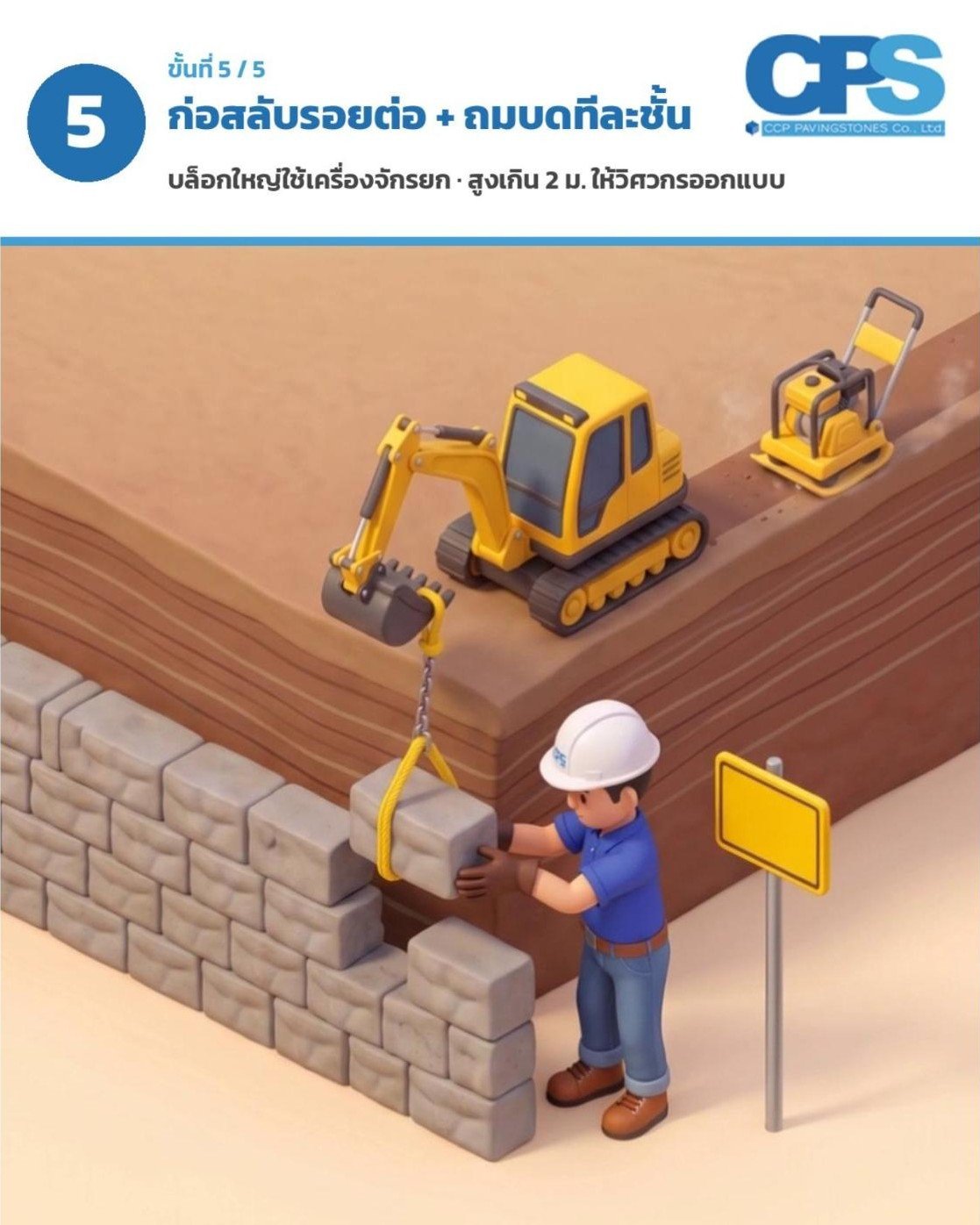
Stagger the joints and compact backfill layer by layer — Lay blocks with staggered joints. Large blocks (450 kg each) are lifted by machine. Backfill with laterite or site soil and compact every 25 cm.
Good to know
Walls higher than 2 m must be designed by an engineer for the actual site.
Small blocks and Geo-blocks can be placed by hand, suitable where machines cannot access · Large blocks need machinery.
After installation, regularly check drainage along the whole wall and fix any standing water immediately.